

Requirements for Embedding a Website
For a website to display in a Pear Deck Web Slide, it must meet both of the following conditions:- Secure connection: The site must use HTTPS. Most secure sites show
https://at the start of the URL. Some browsers, such as Safari, display a padlock icon instead. A few sites (such as National Geographic) support HTTPS even when the address bar does not show it explicitly. - Embeddable: The site must allow itself to be embedded. Some sites explicitly block this. Google Search (google.com) is one example.
https:// in front of the address in your browser to confirm it loads.
Embed a Site That Blocks Direct Embedding
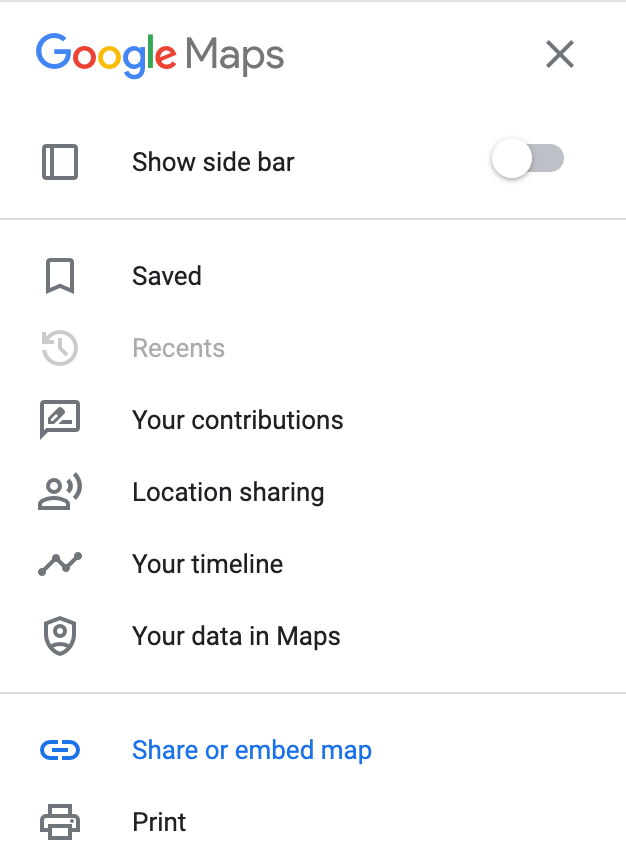
Sites like Google Maps and YouTube block direct embedding but provide a dedicated embed link you can use instead. Follow these steps any time a site offers an embed code option.- Find the embed code. Embed options are usually available under a Share or Settings button. In Google Maps, open the menu and select Share or embed map.
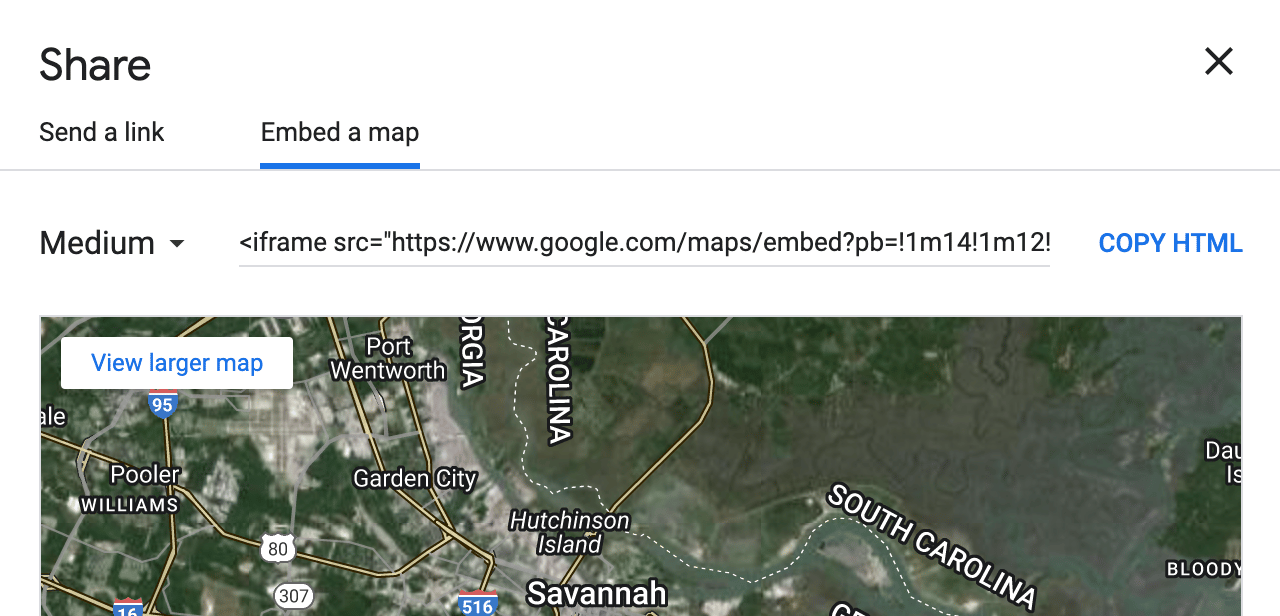
- Navigate to the Embed map tab. Note the full URL in the text field.
- Copy the entire embed code snippet.
-
Paste the code into a text editor or document. Locate the URL inside the snippet. It appears between the first pair of quotation marks in the
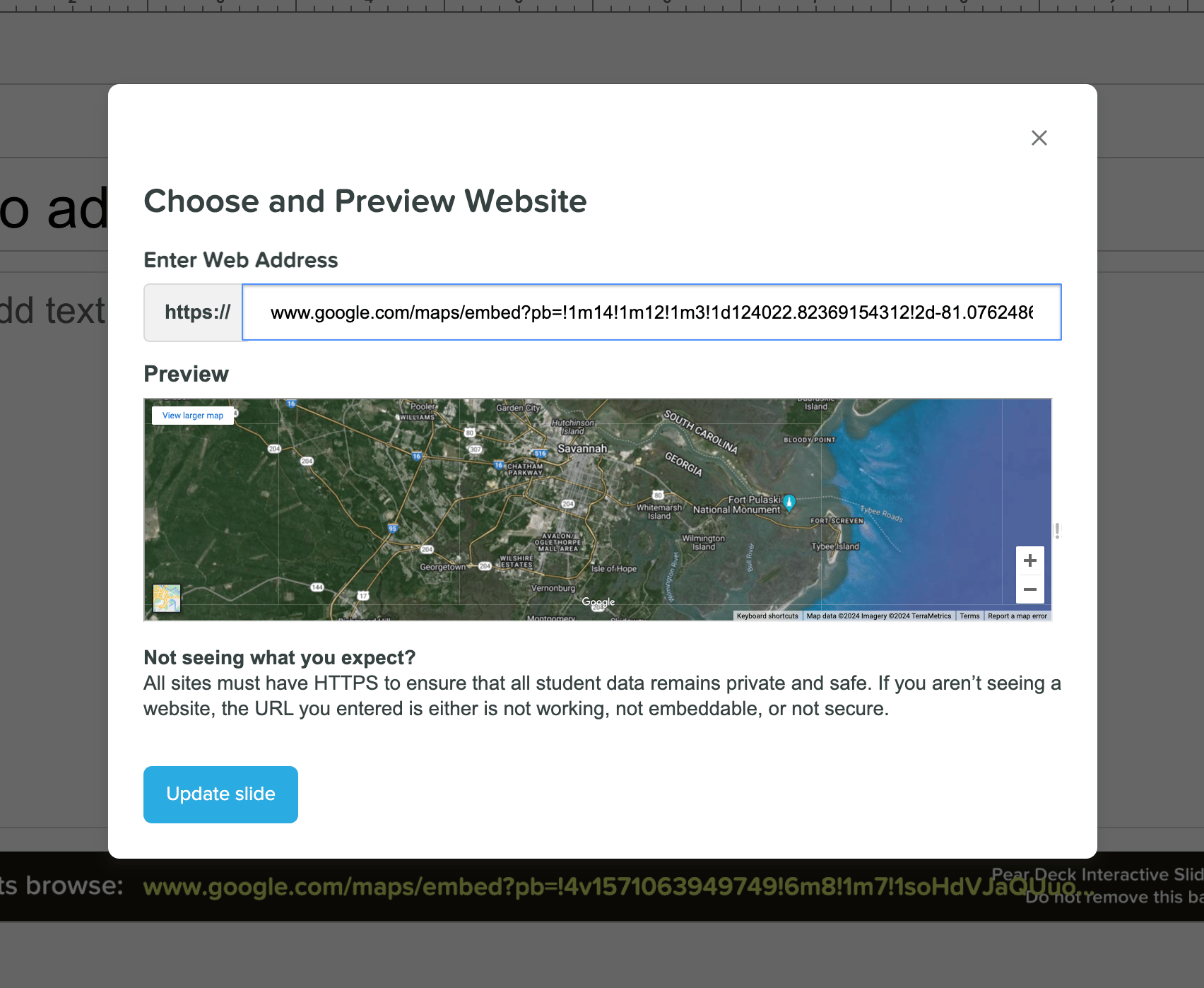
srcattribute. Select and copy only that URL. - In Pear Deck, create a Web Slide and paste the URL into the Web Address field. Click Update slide.
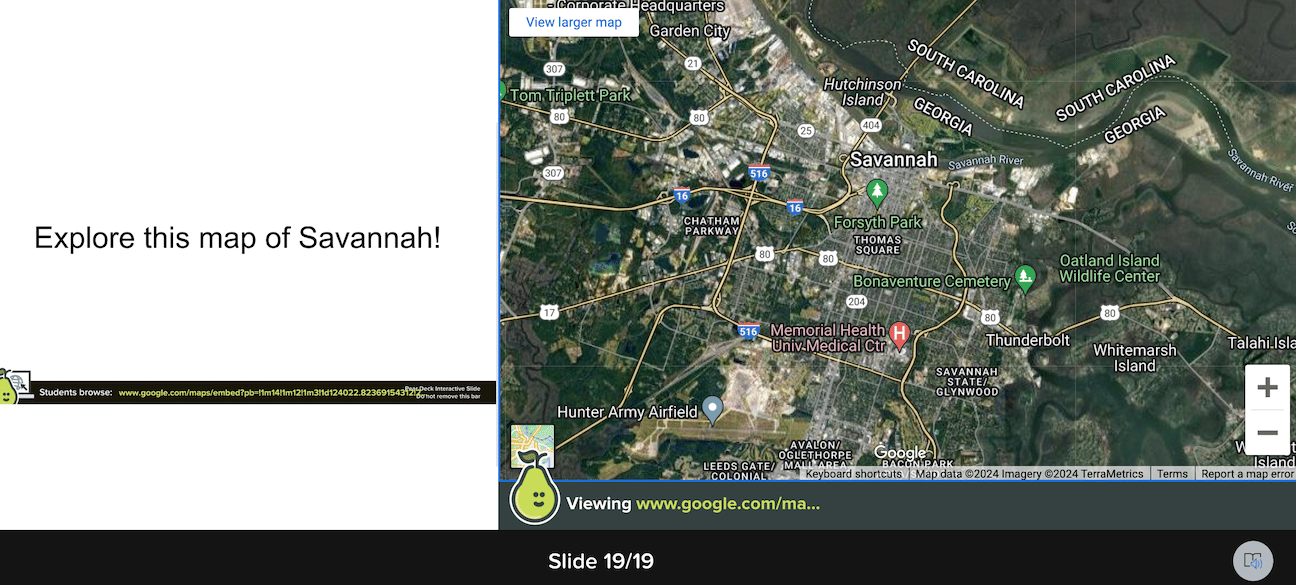
- Confirm the slide renders correctly. If the website is properly embedded, students see it in their view during the session.

Resources
Get Started with Pear Deck Slides
Learn how to insert and configure slides in your Pear Deck presentation.
Use Interactive Question Types
Explore creative ways to use Pear Deck features to engage students.